Game·1991
Super Mario World isn't just a great game — it's the game that proved a new console could arrive and immediately make everything before it feel like a rough draft. Launch title. SNES. 1990. Nintendo handed Miyamoto a blank check and a new machine and he came back with something that still hasn't been topped in its own genre.
I came to this one late. Grew up on the GameCube era, went back to the SNES catalog on my own time, and World was one of those moments where you feel dumb for waiting. Not because it blew my mind technically — it's a 35-year-old game — but because the design logic is so clean it reads like a textbook. Every world teaches you something. Every level refines it. Nothing is wasted.
The cape. The cape is everything.
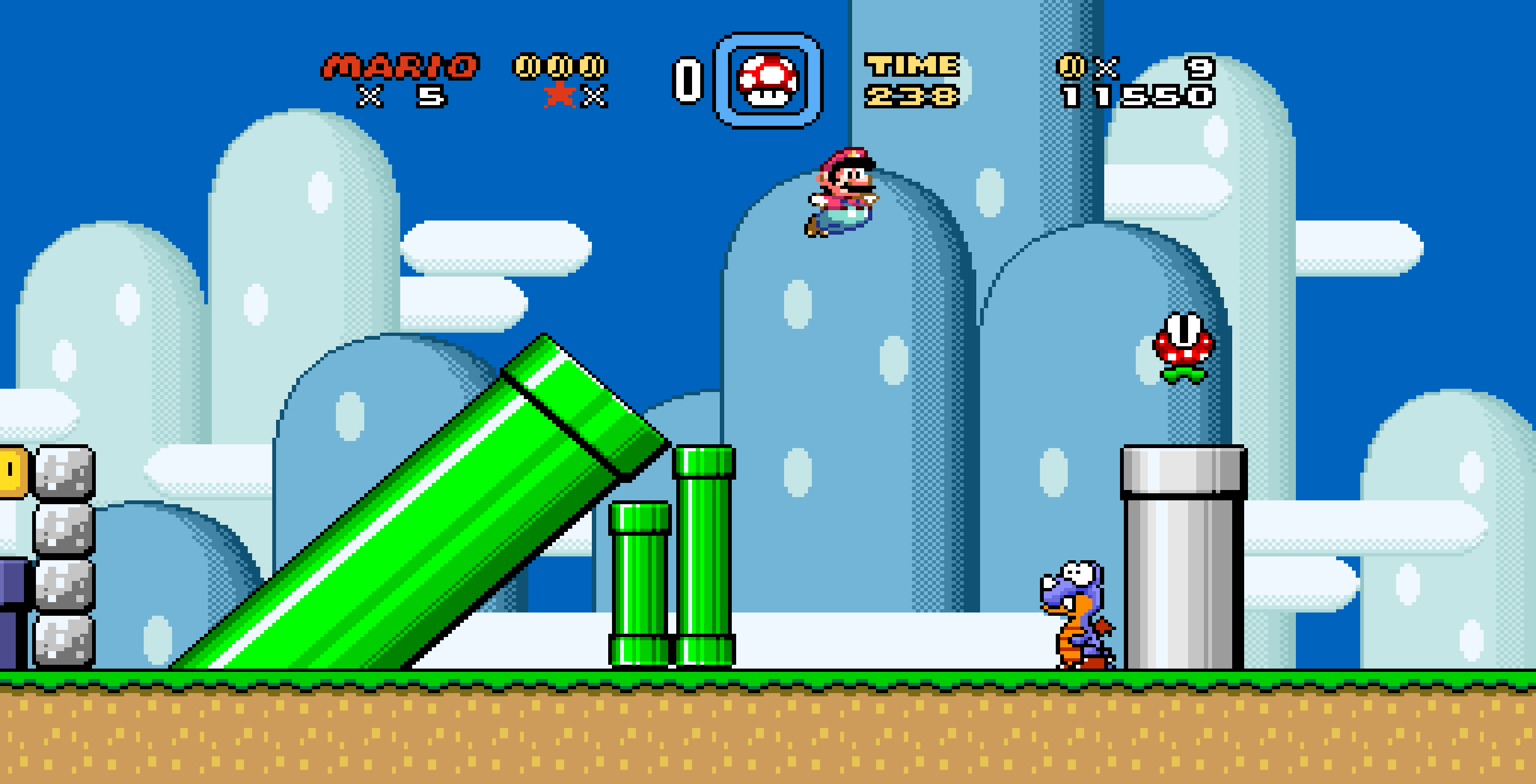
The base game is a masterclass in platformer feel — tight jumps, responsive controls, momentum that rewards learning. But the cape is the thing that turns Super Mario World from a great game into an expressive one. Once you figure out how to sustain flight, the entire map opens up. You can skip levels, sequence break, find your own path. A 1990 platformer giving you that kind of freedom is wild in retrospect.
Yoshi adds another layer. The ride mechanic changes how you approach every level — enemy interactions, reach, the way you weigh risk versus reward when you're about to lose your mount. It's systems stacking on systems, and none of it feels tacked on.
This is the thing people don't talk about enough. The map in Super Mario World is a game unto itself. Multiple paths, secret exits, hidden levels — the whole structure rewards curiosity. Ghost Houses have alternate endings. Star World is tucked behind a wall most players never find. Special World recontextualizes everything.
The map makes replaying it feel like you're still discovering. That's not common. That's rare.
It's not a difficult game by design — Nintendo wanted it accessible. The challenge ceiling is low until you start hunting secrets, at which point it flips entirely. That's a deliberate choice, and I respect it, but if you're coming in looking for something to humble you out the gate, this isn't that.
The boss fights are the weakest part. Bowser's final encounter is chaotic fun, but most of the Koopaling fights are simple pattern reads. They're not bad, just... clearly not where the team spent their time.
Super Mario World is one of those games that reminds you good design is timeless. It's not nostalgic for me — I didn't grow up with it. I played it as an adult and it still landed. The pacing, the map, the way it rewards exploration without punishing you for ignoring it — that balance is harder to achieve than it looks.
If you haven't played it, there's no excuse. It's on every Nintendo platform that exists.
“The blueprint for platform design that still hasn't aged a day.”